
Assign work
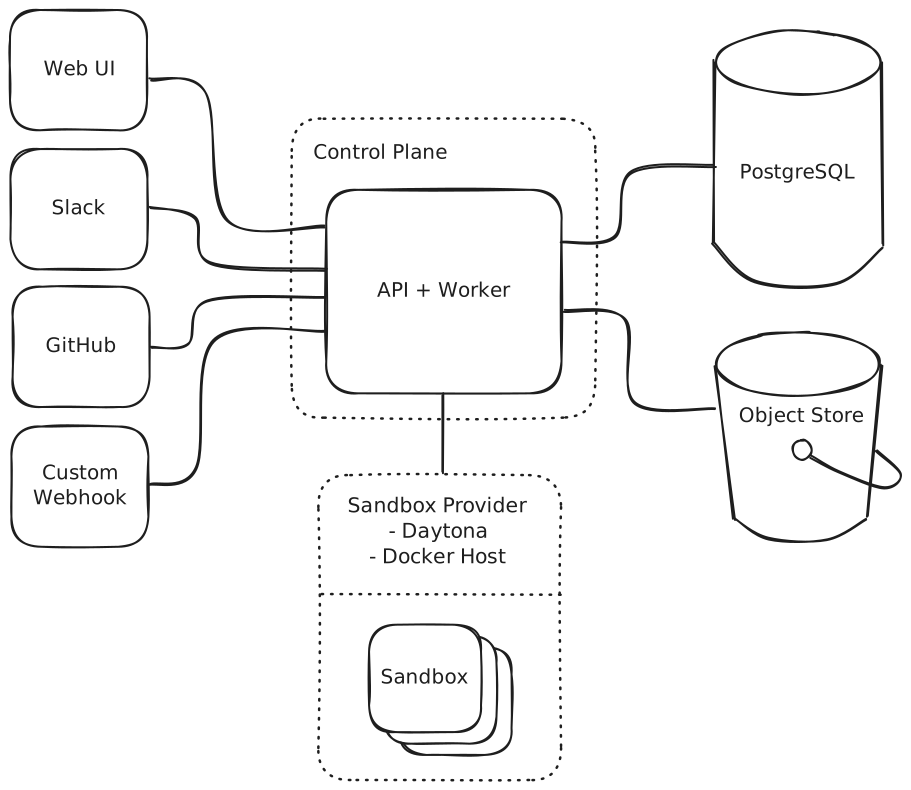
Send a prompt from the web UI, Slack, GitHub, or a webhook.
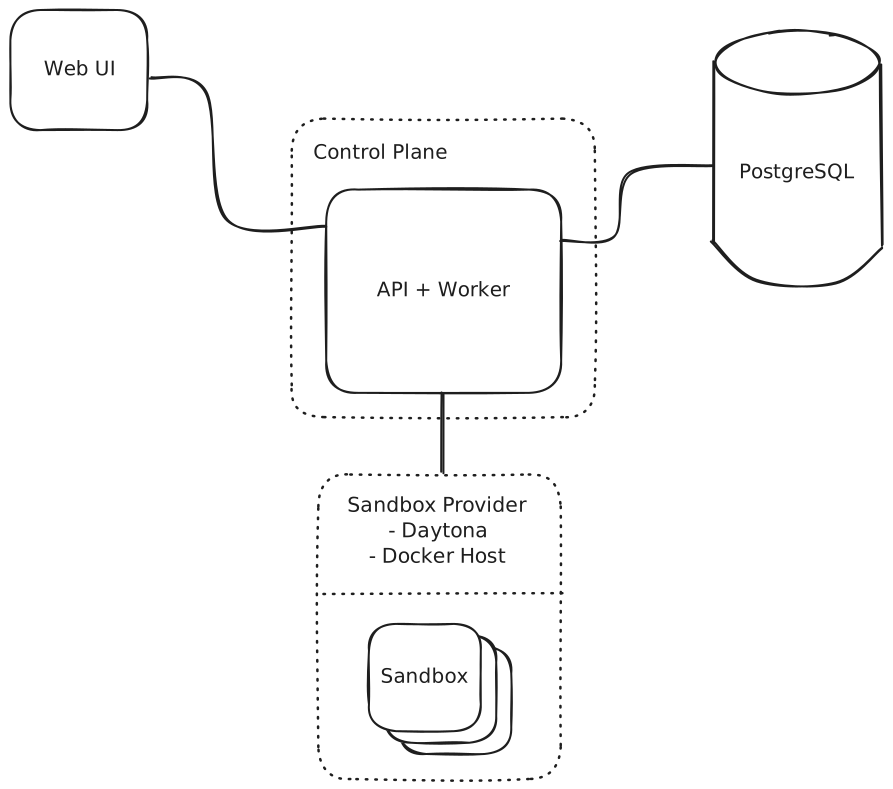
Deputies is a Flue-powered background-agent control plane that runs on your existing infrastructure: a Node API, Postgres database, and static React frontend.
Run agents in sandboxes tailored to your dev environment, with the right repositories, tools, services, and context sources attached.
Send a prompt from the web UI, Slack, GitHub, or a webhook.
Deputies manages the sandbox, work queue, logs, services, and artifacts.
Inspect the transcript, open tools, download artifacts, and follow up.
Queue a follow-up, publish a pull request, or merge the finished work.
Demo
Browse a read-only snapshot of real agent work: the original request, progress updates, diagnostics, artifacts, callbacks, and session context that Deputies keeps together while a background agent runs.
What you can do
Today
Coming soon
Architecture
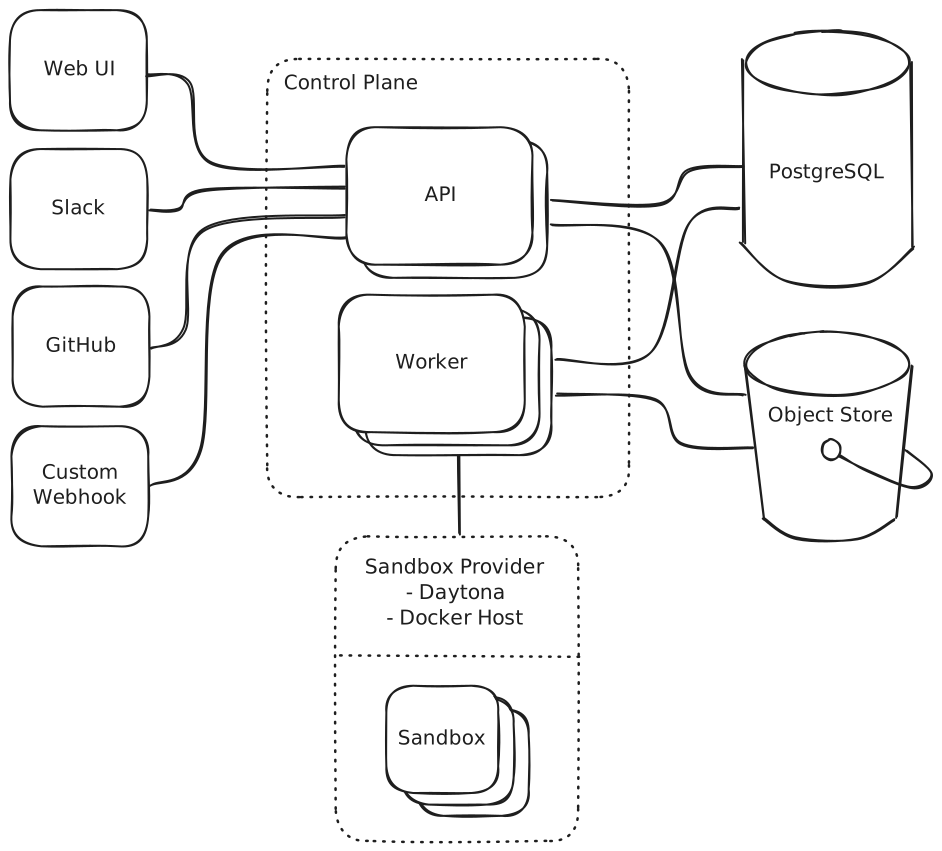
Deputies keeps the web UI, API, worker, database, object storage, and sandbox provider boundaries explicit so the same system can grow from a quick monolith into a production-ready multi-service deployment.
FAQ
A background agent is an AI coding agent that runs asynchronously instead of sitting inside your terminal. You hand it a task, it works in its own environment, and you come back to review progress, artifacts, logs, callbacks, and the final result.
Deputies is built for teams that want to hand off real engineering work to agents while keeping visibility, access control, history, callbacks, and deployment concerns in one place. Inbound events can trigger new work, and recurring tasks can turn the system from a passive queue into something more proactive.
The space includes open-source projects like Open-Inspect and Open SWE, hosted or enterprise-oriented products like OpenHands*, Ona, and Devin, and vendor-native cloud agents like Claude Code and OpenAI Codex. Deputies is another take on the same broad category, with a stronger focus on self-hostable deployment alongside your existing infrastructure.
* Much of OpenHands is open source, but its Cloud and Enterprise code includes source-available features like multi-user support, RBAC and permissions, collaboration, integrations, and self-hosted cloud deployment.
Background agents need access to your code, secrets, development environments, issue trackers, and deploy workflows. Open source lets you self-host the control plane inside the same security boundary as your other systems, while keeping it inspectable, auditable, and adaptable to the deployment patterns your team already uses.
It also gives you an escape hatch. You can change integrations, add providers, debug the full system, and connect to non-standard internal systems with custom adapters instead of waiting for a vendor or treating the agent runtime as a black box.
Deputies works with ChatGPT Pro through @earendil-works/pi-ai/oauth, because Flue uses Pi under
the hood. Any LLM provider supported by Pi should be supported by Deputies, or at least be easy to add.
After working with and extending Open-Inspect and Open SWE, I was excited by the background-agent workflow but frustrated by their deployment constraints. Open-Inspect is tied to Cloudflare, while Open SWE pushes users toward LangChain's hosted LangSmith platform.
When Flue came out, it looked like the right foundation for my take on a background agent: one built with deployability front and center. These systems should run wherever the rest of your infrastructure already runs, so teams can keep secure access patterns intact without introducing a new deployment model.